
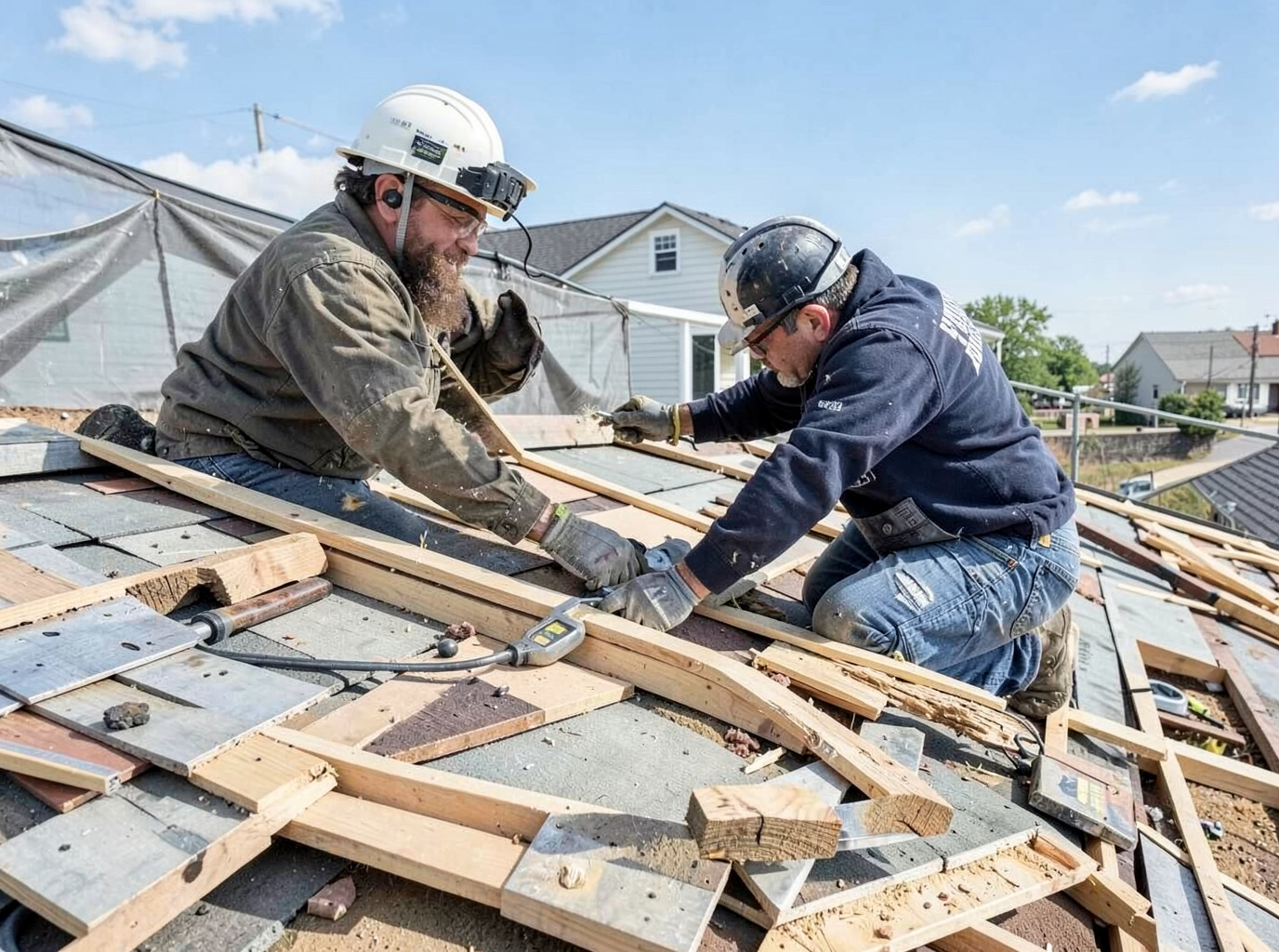
Serving the Lewis & Clark Historic District means working on late-1800s and early-1900s homes with steep pitches, slate accents, and tight setbacks along streets like 3rd and 4th. These properties sit close to the Missouri River, so crews watch for extra moisture that pushes ventilation upgrades and ice-dam flashing during humid continental summers.
Access is often limited to narrow driveways and alleys behind the district's Victorian and Craftsman houses. We stage materials at the curb and use smaller equipment to avoid damaging brick walks or established trees common on these blocks. Hot summer afternoons require early starts to keep shingles workable without wrinkling.
Homeowners near the Lewis and Clark Monument and Bayliss Park call for storm checks after strong winds funnel through the river valley. We match existing profiles on visible slopes and use low-profile ridge vents to preserve the historic look while improving airflow.
Around Lewis & Clark Historic District, IA
We regularly work near:
- 📍General Dodge House
- 📍Lewis and Clark Monument
- 📍Bayliss Park
- 📍3rd Street
Roofing Contractor in Lewis & Clark Historic District, IA — Local Notes
- •Older brick and frame homes in the district often have limited attic access, requiring careful insulation checks before adding ridge ventilation.
- •Proximity to the Missouri River increases humidity loads, so we install enhanced underlayment on north-facing slopes to reduce condensation under asphalt shingles.
- •Narrow lots and on-street parking mean crews schedule deliveries early and use hand-carried bundles to protect sidewalks and avoid blocking 3rd Street traffic.
- •Hot summer temperatures accelerate granule loss on south exposures, so we recommend 30-year architectural shingles with higher wind ratings for river-valley gusts.