
2026-10-17 ·
Ice Dams and Winter Roof Leaks: How to Reduce Risk in Council Bluffs, IA
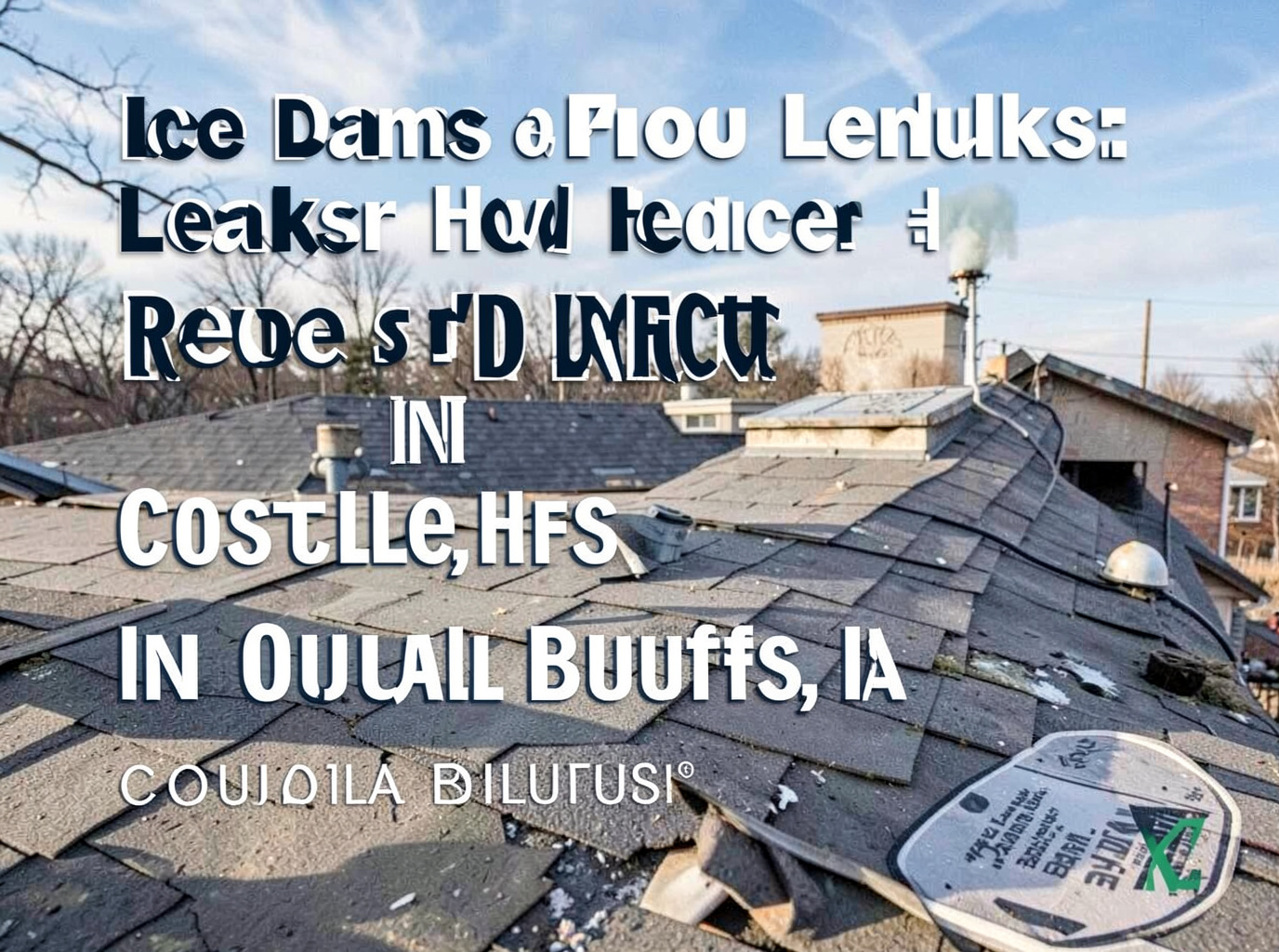
Ice dams and the leaks they cause appear most often on roofs in Council Bluffs when attic heat melts snow that refreezes along the eaves. Homeowners in Pottawattamie County reduce this risk by sealing attic bypasses, adding insulation to at least R-49, and confirming continuous soffit-to-ridge airflow before the first heavy snow. These steps limit the temperature difference that drives the cycle on homes built before 1980 in Downtown Council Bluffs and the Lake Manawa Area.
Why Ice Dams Form on Council Bluffs Roofs
Council Bluffs sits in a humid continental climate where winter lows often stay below freezing for weeks. Snow accumulates on asphalt shingles common throughout Pottawattamie County, then melts wherever attic heat leaks upward. The meltwater runs to the cold eaves and freezes into a dam that backs water under shingles. Homes near Iowa Western Community College and the Historic General Dodge House frequently show this pattern because many retain original insulation levels and limited ridge vents. The same process affects properties across the Missouri River in Omaha when similar construction meets identical weather.
Older neighborhoods in Downtown Council Bluffs and Western Hills also face added pressure from mature tree cover that shades roofs unevenly. Shaded sections stay colder while sun-warmed sections melt snow faster, concentrating water at valleys and penetrations. Checking these micro-conditions each fall prevents the majority of winter callbacks a roofing contractor sees after January thaws.
Attic Fixes That Cut Heat Loss
Start by locating and sealing recessed lights, plumbing stacks, and top plates with spray foam rated for attic temperatures. Add baffles to keep soffit vents clear, then blow in cellulose or fiberglass to reach the R-49 target across the entire ceiling plane. Homes within two blocks of Lake Manawa State Park often need extra attention at cathedral ceilings where space for insulation is limited. These changes keep the roof deck closer to outdoor temperature so snow stays frozen until it sublimates.
After insulation work, verify that bathroom and kitchen exhaust fans vent directly outside rather than into the attic. Blocking this common leak path stops the warm, moist air that accelerates ice dam growth along north-facing eaves in North Council Bluffs.
Drainage and Gutter Steps Before Snow Falls
Clean gutters and downspouts by mid-November so meltwater from any small dam can exit the roofline instead of ponding against fascia. Install gutter screens rated for Iowa snow loads on homes in the Lake Manawa Area where leaf debris from the park collects quickly. Extend downspouts at least five feet from the foundation to keep soil from freezing against the sill plate and driving moisture inward during spring thaw.
On two-story homes common in East Council Bluffs, add a second row of ice-and-water shield six feet up from the eave during any future replacement. This membrane stops water that backs up under the first course of shingles even when a dam forms.
When to Call for Ice Dam Roof Repair
If water stains appear on ceilings after a January thaw, schedule an interior inspection before attempting to remove ice from the roof. A roofing contractor familiar with Pottawattamie County stock can trace the entry point and recommend targeted fixes such as heat cable runs or additional ventilation rather than full replacement. See our related guide on Roof Ventilation and Commercial Flat-Roof Maintenance in Council Bluffs, IA for details on ridge vent upgrades that also help flat sections near Iowa Western Community College.