
2026-10-17 ·
Roof Ventilation and Commercial Flat-Roof Maintenance in Council Bluffs, IA
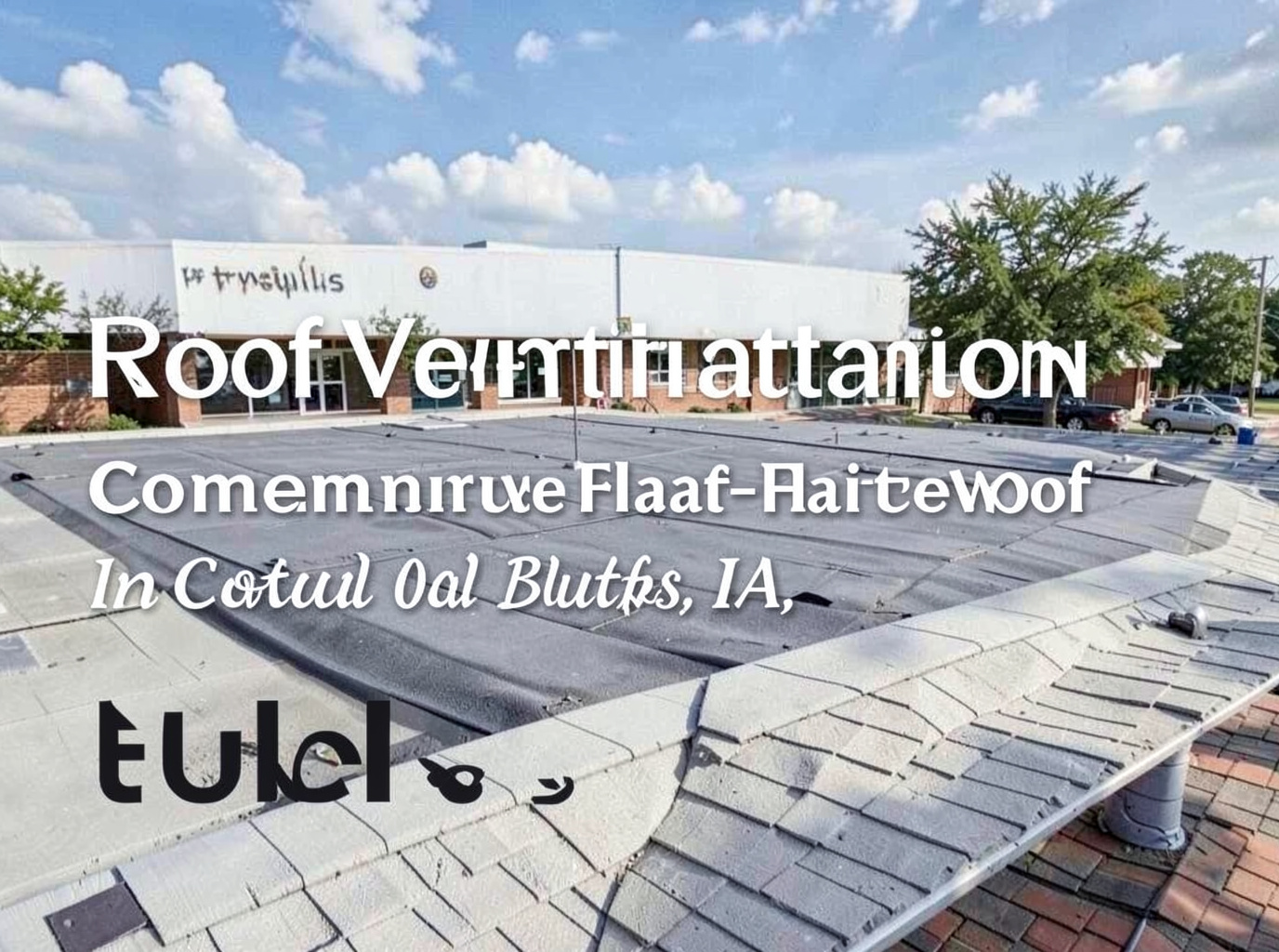
In Council Bluffs commercial buildings, roof ventilation systems combined with scheduled flat-roof inspections extend service life by 8–15 years when performed every spring and fall. Hot summers in the humid continental climate push roof surface temperatures above 140°F, accelerating membrane breakdown on flat sections while poor attic airflow in mixed-use structures near Downtown Council Bluffs traps moisture that leads to deck rot.
Why Ventilation Matters on Mixed Commercial Roofs
Council Bluffs sits in Pottawattamie County where summer highs routinely exceed 90°F and humidity lingers. Without balanced intake and exhaust vents, heat builds under low-slope sections and drives up cooling loads for businesses along the Missouri River corridor. Older masonry buildings near the Historic General Dodge House often retain original roof decks that were never designed for modern HVAC exhaust; adding ridge and soffit vents or turbine units reduces attic temperatures by 20–30°F and cuts ice-dam risk the following winter. Flat-roof sections over retail spaces in Manawa benefit from the same airflow principles because trapped heat causes blistering in modified-bitumen membranes. Property owners who install Roof Ventilation Installation early avoid the need for full Roof Replacement later.
Flat-Roof Maintenance Steps for Council Bluffs Conditions
Begin each season with a walk on the membrane after rain to locate ponding areas larger than 1/4 inch deep. Clear drains and scuppers at Iowa Western Community College campus buildings and along Lake Manawa State Park access roads where cottonwood seeds clog lines quickly. Check seam integrity on EPDM and TPO systems; any lifting greater than 1/8 inch signals the need for immediate Commercial Flat Roof Repair. Apply compatible coating every 5–7 years on surfaces exposed to constant UV and the freeze-thaw cycles common between November and March. Document every visit with dated photos so patterns around HVAC curbs or parapet walls become visible before leaks reach tenant spaces.
Seasonal Timing and Local Weather Impacts
Schedule major work between April and October when daytime temperatures stay above 50°F for proper adhesion. Spring inspections catch winter damage from ice dams that form along the bluffs overlooking Omaha. Summer visits focus on blister repair before afternoon thunderstorms drop two inches of rain in under an hour. Fall maintenance includes adding extra insulation baffles in vented attics of buildings near Lake Manawa Area to prevent the next season’s ice issues. These timed visits align with the real weather patterns that affect Pottawattamie County rather than generic national advice.
When to Call for Professional Assessment
If standing water remains 48 hours after a storm or interior stains appear near roof drains, contact a local contractor familiar with Council Bluffs stock. Early intervention on a 2,000-square-foot commercial section typically costs far less than emergency Emergency Roof Leak Repair during a July downpour. Review the article Roof Inspection Tips After Hail and Windstorms in Council Bluffs, IA for post-storm checklists that complement routine flat-roof care.